
I Paid $49 to Become a Voiceover Artist. Here's What It Actually Cost.

How a two-hour class in a Santa Monica College classroom taught me everything I needed to know… except how to actually land the job.
The receipts
$49
to get in the door
$199
on a microphone, four years later
$0
earned from voiceover
0
auditions submitted
2
doors still open. I'll keep you posted.
"Do People Tell You, You Have a Great Voice?"
In 2018 I'd recently moved to LA and was looking for ways to earn extra money. I also wanted something that would scratch the paid-performance itch I'd been sitting on since college. I did musical theater as a kid and took acting in college, and LA is the kind of city where at any given moment someone you know is doing something in entertainment. Not trying starts to feel like you're missing out.
So I did what I do: I started scanning the local class listings for cheap things to test. One of my favorite hobbies.
That's when I saw it.
"Are people always telling you that you have a great voice? Do you often find yourself listening to your favorite audiobook, commercial, or cartoon character and thinking, 'I could do that'?"
Me: "yes. And yes."
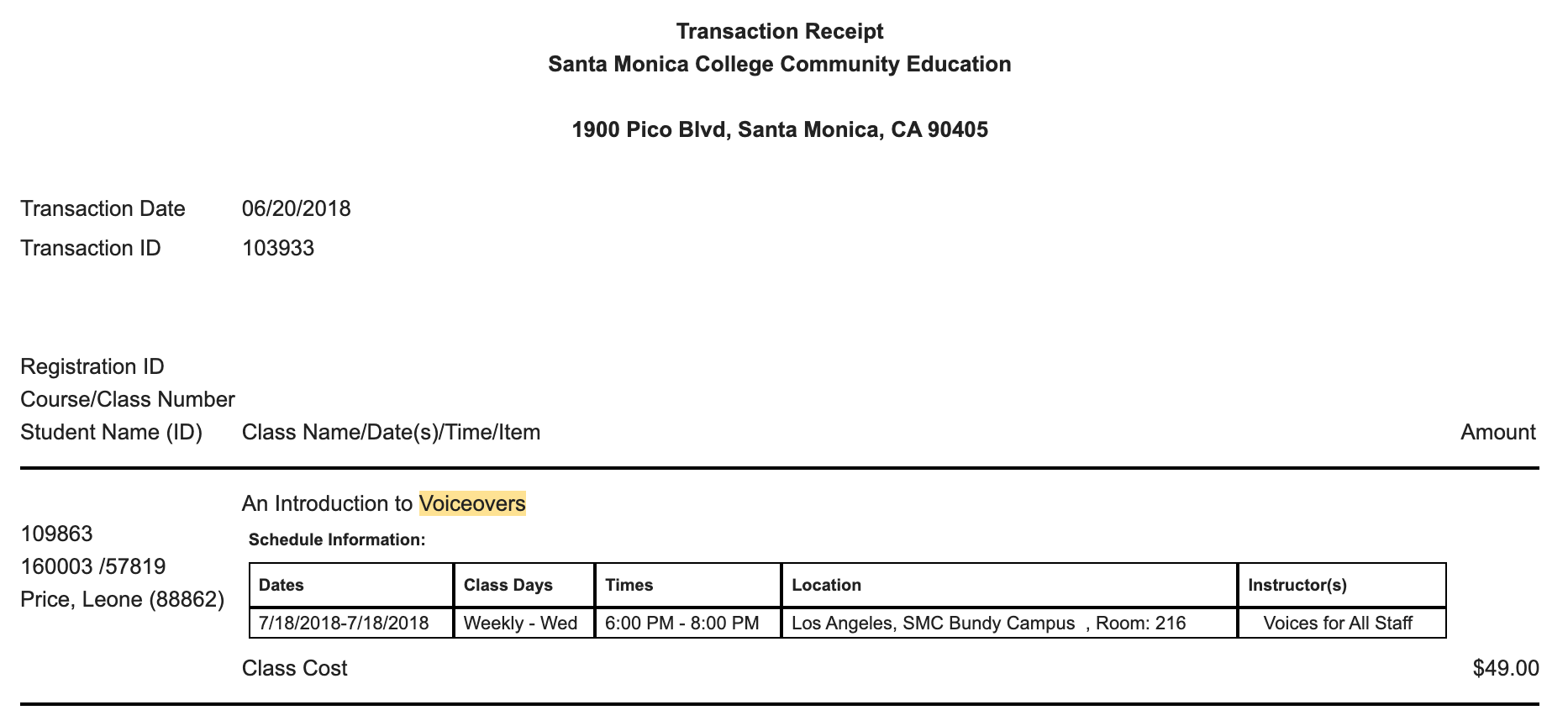
The class was called An Introduction to Voiceovers. Two hours, one Wednesday night, $49 at Santa Monica College ("SMC"), taught by a company called Voices for All. And I'm known to try anything that sounds or is marketed as easy money. A voiceover career you can do from home? The work was everywhere, and the barrier felt low.
I signed up without thinking.
What the Class Actually Was
I showed up to a two-hour in-person session and sat in a classroom with other people who had also been told they had great voices. The class was a real overview: the different types of voiceover work, what tools you need, what the industry actually looks like. You read from real scripts. The instructor gave actual notes on your performance.
It was genuinely fun. It was also very clearly the start of a longer sales funnel.
What I Did Instead
After the class, I did what you're supposed to do: I checked Backstage. Frequently.
Backstage is the legitimate industry job board: real casting directors, real projects, real auditions. But there's a catch: browsing is free, applying isn't. A paid subscription runs $199.99/year (currently on sale for $84.95/year as of the date of this post), and you need it just for the right to submit. And even with a subscription, every listing I found either felt out of reach or required something I didn't have: a demo reel, headshots, a home studio setup, or experience I couldn't yet claim. The postings weren't fake. I just wasn't equipped for any of them...and it wasn't a price I was ready to pay while I was still just starting out.
So I pivoted. If I couldn't audition for someone else's project, I could at least use the skills I'd just paid to learn on my own content. I started narrating my Instagram Reels.
And then...four and a half years later... I bought a microphone.
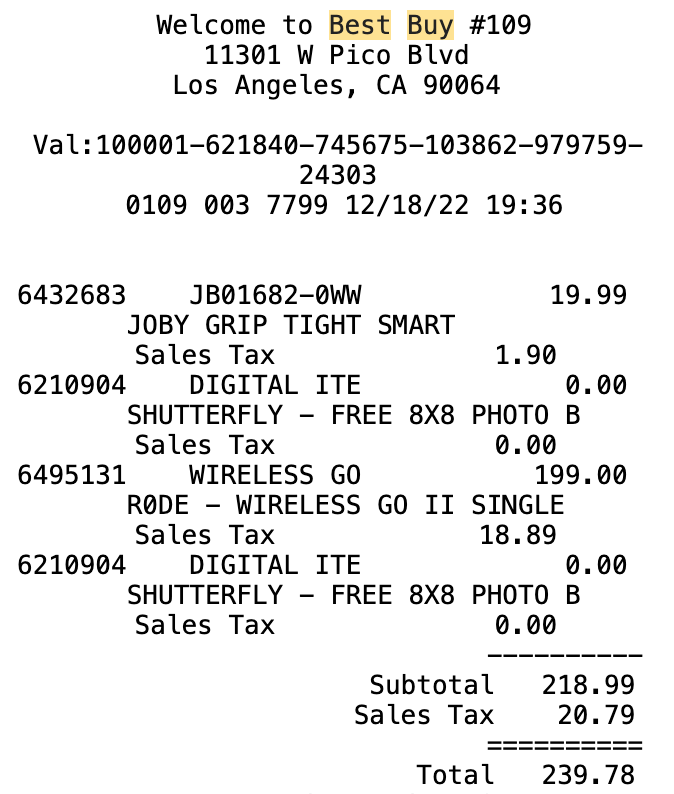
December 18, 2022, at the Best Buy on Pico. A RØDE Wireless GO II Single for $199.
Here's what any voiceover coach would clock immediately: the Wireless GO II is not a voiceover mic. It's a wireless lavalier system designed for content creators. The mic they would have pointed me toward is a studio condenser like a RØDE NT1 Signature Series or a Blue Yeti.
I bought the content creation mic. Because by 2022 I wasn't trying to become a voiceover artist anymore. I was making Reels, and I wanted them to sound better.
That, quietly, is the honest ending of this story. The voiceover class didn't turn me into a voiceover artist. It turned me into a content creator who knew how to use her voice.
Why I Actually Didn't Follow Through (The Real Reason)
Here's the thing I've learned after running 80+ side hustle experiments: I'm really good at guided hustles and really bad at self-directed ones.
Poshmark? 919 sales. OfferUp, eBay, Facebook Marketplace, Etsy? Hundreds more. These platforms all have the same thing in common, there's a step-by-step playbook. List the item. Write the description. Price it. Ship it when it sells. The marketplace does the finding-buyers part. My job is to show up and execute.
I've built a whole side hustle career on guided systems. When there's a roadmap, I will out-execute most people.
Voiceover doesn't have that. It's the opposite. You have to post yourself into a nebulous audition pool, hope someone picks you, build your own reputation, market yourself, follow up with leads. There's no algorithm rewarding consistency.
I signed up for the $49 class because I thought it would solve this. And to be fair, it partially did. The class taught me about equipment, script types, where to audition. But at the end, the pitch came: for $1,849-$4140, Voices for All would teach you how to actually get hired. The marketing workbooks. The coaching. The demo reel. The home studio equipment.
That's the part that wasn't in the $49 class. Which makes sense, that's their business model. And honestly, the master class would have probably worked. It's the scaffolding I needed. I just wasn't ready to spend four figures on a side hustle I hadn't proven I wanted.
What I actually needed was something simpler and cheaper: one person who had already done this. A mentor in the industry. An accountability partner. Someone who could walk me through their first gig, tell me which pay-to-audition platforms were worth it and which were a tax, critique a rough demo recording, and text me "did you submit this week?" until I got my first booking.
The master class was one version of that scaffolding. A mentor would have been another. Either would have closed the gap. I had neither, so nothing closed it.
So I walked away with the knowledge that I had the voice, I had the background, I had the city, but I didn't have the guided system. And without one, I never moved.
The Research Phase (A Cautionary Scroll)
While I was giving up on Backstage, I also spent some time on Craigslist. Which was a completely different experience.
One posting from a company called Aesir Voice Network, out of La Verne, California:
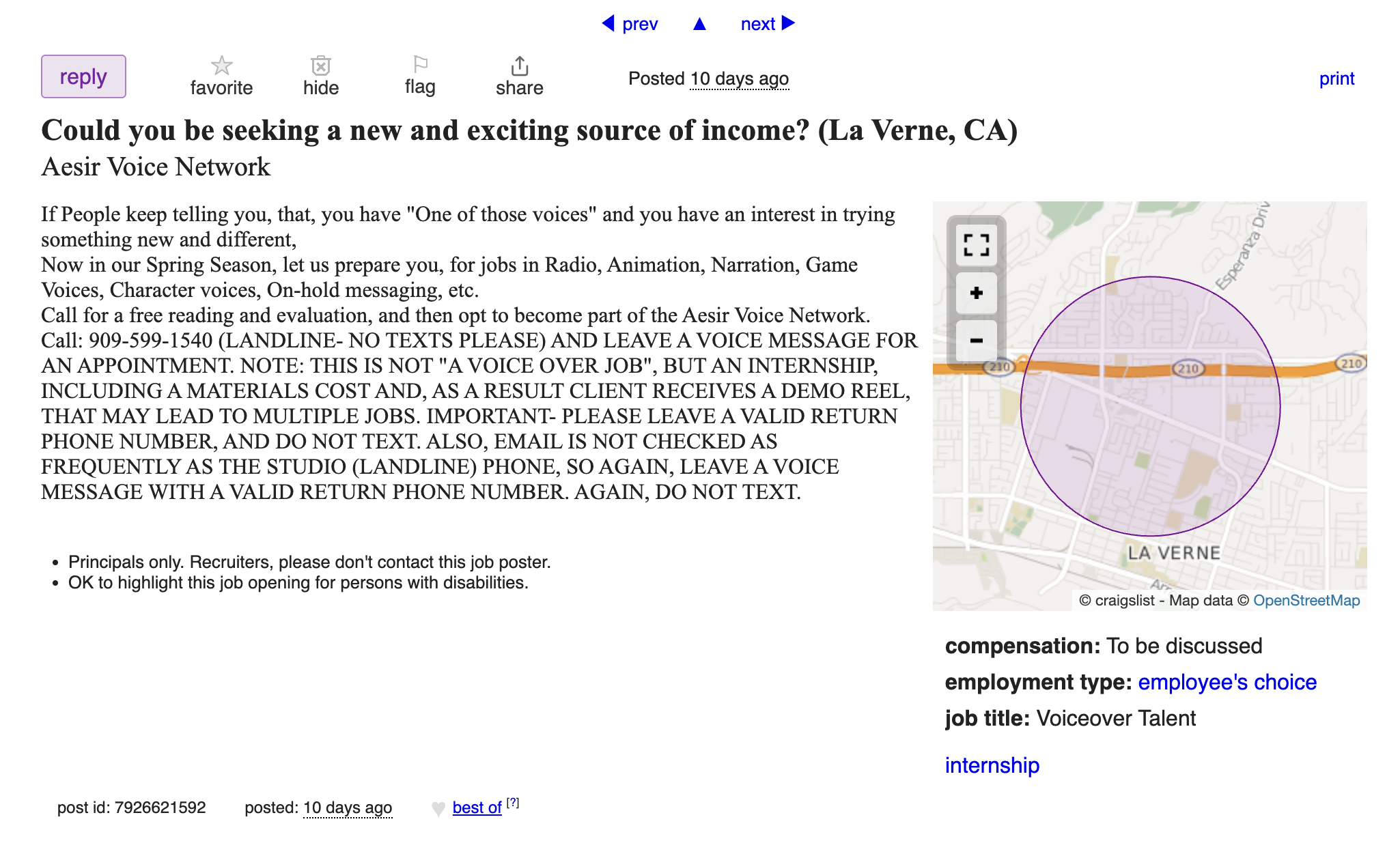
A landline. In La Verne (35 miles from Hollywood), not exactly the epicenter of anything. An internship that you pay for. The disclaimer appearing three separate times as if the first two didn't stick.
The Craigslist voiceover market is basically two things: real casting calls buried underneath a pile of these, and these. The ratio is not in your favor.
Where to Actually Look
Start here! Free, no demo reel required
ACX (Amazon's audiobook platform) is the most underrated entry point in voiceover. No membership fee. No demo reel required just to audition. Audiobook narration pays $100–$400 per finished hour.
Casting Call Club is free, lots of indie projects. Low pay, but it's how you build credits.
Build your own proof of concept
Fiverr or Upwork lets you post a voiceover package and have clients come to you.
Once you have a reel and credits
Voice123 (~$495-$2,200/year), Voices.com (~$499/year), and Backstage ($199.99/year, currently on sale for $84.95). Higher budgets, real competition. Where you graduate to, not where you start. Budget accordingly, these can add up before you've booked a single job.
The True Cost
Here's where it gets real.
My all-in spend was $248 spread across four and a half years, on a mic that was designed for something else. Technically one of the cheapest experiments in this series. Also the one where I did the least with it.
Pros & Cons
What actually works
+From home, on your schedule, in your pajamas
+Scalable once established — passive income potential
+Audiobooks pay $100–$400 per finished hour
+Acting background transfers directly
+The mic has a dozen other uses (Reels, podcasts, video)
What's hard
−Demo reel required to audition anywhere real
−Pay-to-audition platforms cost money before you earn
−Needs a genuinely silent room — harder than it sounds
−Everyone has "a great voice." That's the whole pool.
−No forcing function — momentum is entirely on you
The Quiet Space Problem Nobody Puts in the Marketing
I want to give this its own section because nobody talks about it and it matters.
You need a dead-silent room. Not a quiet room. A silent one. HVAC hum. Street traffic. A neighbor's TV at 9pm. Voiceover is unforgiving about background audio in a way that casual Reels recording just isn't.
If you live in an apartment, especially in LA, you're dealing with all of this. The workaround people actually use is recording inside a closet full of clothes. Fabric absorbs sound. It works. But that's a thing you figure out after you've already recorded something that sounds like you're narrating from inside a Starbucks.
The Doors I Haven't Closed
Here's the thing about voiceover that's kept me from fully giving up: a friend of mine narrated her own audiobooks and made real money doing it. And I see a world where I can also make real money (aka $100 to $400 per finished hour that audiobook narrators actually command) through ACX, Amazon's audiobook production platform.
The insight there is simple: there's a whole category of people who will pay you to read their content out loud. Busy professionals. Parents who can't sit still with a book. Commuters. Authors who can't narrate themselves. Audiobooks are the fastest-growing segment of publishing for a reason.
So the RØDE mic is still on my desk. The voice is still here. ACX is free to join. I'll update you once I go through the process.
The Lesson
There's a version of this post where the math is bad and I tell you not to do it. This isn't that post.
Voiceover isn't a scam. The $49 wasn't a waste. The RØDE mic has paid for itself in everything else I've used it for... just not the thing I bought it for.
What voiceover taught me is something more useful than "follow through harder." Some side hustles come with guided systems — Poshmark, TaskRabbit, Uber, Etsy. The platform tells you what to do, the work shows up, you execute. Those are the ones I've done at scale.
Other side hustles are self-directed — voiceover, freelance writing, consulting, anything where you have to manufacture your own leads. Those require a different skill set: self-promotion, cold outreach, building a presence before the work arrives. I haven't figured that muscle out yet.
So the real cost of voiceover wasn't $49. It was four and a half years of learning something about myself: I need a system to perform. Without one, I stall. The Voices for All master class probably would've worked because it would've handed me the system. I just didn't know that's what I was buying.
But the door isn't closed. ACX is free. The mic works. And now I know what kind of scaffolding I actually need to follow through.
I'll let you know what happens when I finally try.
Subscribe to my newsletter
Join readers getting real numbers from real experiments. Free, no spam.

Member discussion